
During the environmental assessment procedure, the Ministry of Development , Public Works and Administration, holder of the Interreg VI-A Romania-Bulgaria Program, announces the interested public on the availability of the draft Program and the Environmental Report related to the said Program. The documents can be consulted at http://www.mmediu.ro/ and www.interregiciarobg.eu . Comments and suggestions regarding these documents are received at the email addresses: mihaela.macelaru@mmediu.ro and robg@mdlpa.ro , within 30 calendar days from the date of publication of the announcement.
IMPORTANT PROGRESS IN THE APPROVAL PROCESS OF THE INTERREG VI-A ROMANIA-BULGARIA PROGRAMME
Interreg VI-A Romania-Bulgaria Programme was approved by the Joint Working Group for Programming (JWG) during the third meeting organised today, February 3rd, 2022.
This is an important step in the process approval of the programme by the European Commission. Before submitting the programme to the European Commission for approval within the deadline established by the EU Regulation, the 2nd of April 2022, the programme must be approved by the governments of Romania and Bulgaria, which will take place during February-March 2022.
The discussion and decisions agreed by the JWG members today were focused on the most important sections of the Programme: the strategy and the priorities of the programme, the horizontal principles, the approach of the communication and visibility of the programme, the consultation process, the programme structures, small scale projects and the apportionment of liabilities among participating member states. As well, the calendar for the carrying out the Strategic Environmental Assessment (SEA) was presented to the JWG members.
Another important topic on today’s agenda was the presentation of the projects of strategic importance for Priority 1 – A well connected region (SO 3.2) and Priority 2 – A greener region (SO 2.4- risks related operations), projects which will be included in the annex to the programme. The identification process of the projects of strategic importance was carried out during 2020 and 2021, as part of the programming process, using open calls and discussions with the relevant stakeholders.
The final version of the programme approved by the JWG can be consulted here and the presentations made may be consulted here.
ONLINE WORKSHOPS WITH POTENTIAL BENEFICIARIES
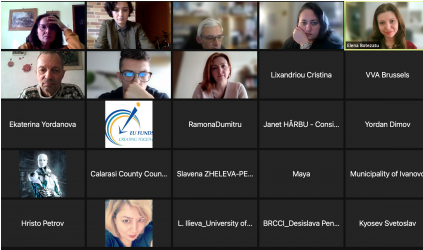
On the 17th and 18th of January 2022, two online workshops to present the draft of the Interreg VI-A Romania-Bulgaria Programme and the future financing opportunities took place.
The workshops were organized by Civitta Romania and VVA Brussels and gathered more than 140 participants, stakeholders coming from the Western and Eastern regions of the Romania-Bulgaria cross-border area.
During the events the participants found out more about the joint challenges and investment needs, the main financing priorities of the new programme as well as examples of actions. The attendees had a chance to participate in interactive breakout sessions where they discussed potential project ideas and asked questions related to specific priorities.
For details and updated info related to the programme stay tuned on our Facebook page and website.
The presentation from the two workshops can be accessed here.
Tourism for all

Accessible tourism
All tourism businesses and institutions should aim to be universally accessible and create barrier-free tourism. This means ensuring tourist destinations, products and services are accessible to all people, regardless of their physical limitations, disabilities or age. Accessible tourism aims to allow tourism destinations to be enjoyed equally by everyone.
As an entrepreneur, you have to consider accessibility of tourism and leisure spaces as a basic quality factor – but you should also see it as an opportunity for differentiation and as a way to attract new customers.
While designing, executing, operating, maintaining and communicating about your tourism business, you must ensure that it is accessible and available to everyone.
Types of accessibility
There are various types of accessibility
- physical accessibility – improving spaces and infrastructure to create an environment where citizens can move around freely
- communication accessibility – helping people with communication difficulties to get their message across via tools and trained staff
- web accessibility – making booking services and related websites easier to access (view the EU tutorial on making your website e-accessibleSearch for available translations of the preceding link)
How should I adapt my tourism business to be accessible?
Accessible tourism is about making it easy for everyone to enjoy tourism experiences. Making tourism more accessible is not only a social responsibility – there is also a compelling business case for improving accessibility as it can boost the competitiveness of tourism businesses.
Evidence shows that making basic adjustments to a facility, providing accurate information, and understanding the needs of disabled people can result in increased visitor numbers.
Areas that need to be adapted according to subsectors
| Tourist information offices | Hotel establishments | Restaurants and cafés |
|
|
|
For more on how to apply physical accessibility measures in your tourism company, consult information on accessible tourismSearch for available translations of the preceding link.
Benefits of physical accessibility for your business
- Increase in the potential demand – according to the World Health Organisation, there are over 1 billion permanently disabled people in the world (15% of the world population) – this proportion rises to around 40% of the world population when including other categories of people who may temporarily need accessible services
- ‘Multi-client’ segment – on average, every 2 disabled guests will bring one companion
- Promotion of off-season travel – some senior citizens and disabled people can travel in low season – since these periods are less busy, travellers can often have greater accessibility to services
- Improving the company’s reputation – businesses that offer comprehensive accessibility will be seen in a better light than those that don’t, since they are taking steps to ensure their product or service can be used or enjoyed by everyone.
What is the current legislation on the topic?
Physical accessibility is regulated not only by international and European regulation, but also by national regulation. The main accessibility regulations and other instruments on an international and European level are as follows
- UN convention on the rights of persons with disabilities
- The global code of ethics for tourismSearch for available translations of the preceding link
- Council of Europe recommendation on ageing and disability
- Council of Europe resolution on universal design to achieve full participation
- Committee of the Ministers recommendation on the action plan to promote the rights and participation of the disabled
- Commission regulation on rights of disabled people in air travelSearch for available translations of the preceding link
Useful resources
- visit Britain offers case studies on physical accessibility in tourism.
- watch the ‘Mind the accessibility gap’ conference video summary from June 2014.
- the European Network for Accessible Tourism (ENAT)Search for available translations of the preceding link
- Europe For All accessible tourism directory – where you can register as a provider of accessible tourism services, evaluate your property and get in touch with customers
- learn about some good practices of accessible tourism from the European Capital of Smart Tourism competition’s compendium of best practices
Tutorial
Giving the right information on accessibility services
Find out what information you should transmit to disabled people, when this information should be transmitted and how to do so.
Sustainable transnational tourism products

To diversify the EU tourism offer, the European Commission offers co-funding through the COSME programme to sustainable transnational tourism products.
These are thematic tourism products such as transnational itineraries, routes, trails focusing on different themes such as: environmentally friendly tourism, sports tourism, food and wine tourism, health and wellbeing tourism, nature tourism, or ‘slow tourism’ – travel which allows tourists to engage more fully with communities along their route.
The aim of this initiative is to
- strengthen transnational cooperation in sustainable tourism
- encourage greater involvement in sustainable tourism for small and micro enterprises, and local authorities
- stimulate competitiveness in the European tourism sector
Projects awarded funding in 2020
Six projects are being co-financed under the 2019 call for proposalsSearch for available translations of the preceding link ‘Boosting sustainable tourism development and capacity of tourism SMEs through transnational cooperation and knowledge transfer’ (COS-TOURCOOP-2019-3-01). These projects aim at
- reinforcing transnational and cross-border cooperation to enable sustainable growth of tourism SMEs
- cultivating SMEs’ capacities and skills for solutions for more sustainable management and tourism sustainability in general
- encouraging innovative solutions for sustainable tourism through cross-sectoral cooperation
| Coordinating organisation | Project | Project description |
|---|---|---|
| Chamber of Commerce of Marche Region (CCIAAM) | CEnTOUR – Circular Economy in Tourism | InfoSearch for available translations of the preceding link + presentationSearch for available translations of the preceding link |
| X23- the Innovation Bakery | EU ECO-TANDEM programme | InfoSearch for available translations of the preceding link + presentationSearch for available translations of the preceding link |
| European Centre for Eco and Agro Tourism (ECEAT) | SUSTOUR – Promoting sustainability among the European tour operator sector through a business led approach. | InfoSearch for available translations of the preceding link + presentationSearch for available translations of the preceding link |
| Barcelona Chamber of Commerce, Industry, Services and Navigation (BCC) | Tourban – Accelerating SME capacity and inn Barcelona Chamber of Commerce, Industry, Services and Navigation (BCC) | infoSearch for available translations of the preceding link + presentationSearch for available translations of the preceding link |
| Consulta Europa Projects and Innovation S.L / CE | TOURISME – Improving sustainability of tourism SMEs through knowledge transfer, international cooperation and multi-stakeholder engagement | InfoSearch for available translations of the preceding link + presentationSearch for available translations of the preceding link |
| Eberswalde University for Sustainable Development, HNEE (Germany) | ETGG2030 – European Tourism Going Green 2030 | InfoSearch for available translations of the preceding link + presentationSearch for available translations of the preceding link |
Projects awarded funding in 2015
Ten projects are being co-financed under the 2015 call for proposalsSearch for available translations of the preceding link, ‘Diversifying the EU tourism offer and products – Promoting transnational thematic tourism products’.
They aim at promoting the development and promotion of transnational tourism products in the fields of a) sport and/or wellness and b) cultural or industrial heritage.
| Coordinating organisation | Project | Project description |
|---|---|---|
| VisitBrabant (The Netherlands) | PITCH VGE
Promoting International Tourism for Culture and Heritage Van Gogh Europe |
InfoSearch for available translations of the preceding link + presentationSearch for available translations of the preceding link |
| CULTUREPOLIS (Greece) | DIVERTIMENTO
Diversifying tourism offers in peripheral destinations with heritage-based products and services, |
InfoSearch for available translations of the preceding link + presentationSearch for available translations of the preceding link |
| Westcountry Rivers Trust (UK) | FishTrail Improving transnational angling tourism. |
InfoSearch for available translations of the preceding link + presentationSearch for available translations of the preceding link |
| University of Central Lancashire, Institute of Transport & Tourism (United Kingdom) | EV5-VRF
EuroVelo 5 cycle route – Via Romea Francigena |
infoSearch for available translations of the preceding link |
| Fédération Française d’Equitation (France) | EERA
European Equestrian Route d’Artagnan |
InfoSearch for available translations of the preceding link + presentationSearch for available translations of the preceding link |
| APIFORM s.r.l. (Italy) | GENIUS LOCI valorising the tourism potential of industrial heritage and living industry |
InfoSearch for available translations of the preceding link + presentationSearch for available translations of the preceding link |
| Catalan Tourist Board (Spain) | Hiking Europe
discovering Rural Europe through hiking trails |
InfoSearch for available translations of the preceding link + presentationSearch for available translations of the preceding link |
| Mancomunidad del Norte de Gran Canaria (Spain) | TastyCheeseTOUR blended itineraries (cultural, industrial, culinary, agricultural and livestock) in rural regions that produce high quality cheese |
InfoSearch for available translations of the preceding link + presentationSearch for available translations of the preceding link |
| Municipality of Brindisi (Italy) | Well-O-live
Wellness and wellbeing experience across the European Routes of the Olive Tree |
InfoSearch for available translations of the preceding link + presentationSearch for available translations of the preceding link |
| UNIVERSIDAD DE LAS PALMAS DE GRAN CANARIA (Spain) | SUNRISE
Green Room – SUrfiNg Routes In a Sustainable Europe |
InfoSearch for available translations of the preceding link |
Projects awarded funding in 2014
Five projects are being co-financed under the 2014 call for proposals, Diversifying the EU Tourism Offer and Products – Sustainable Transnational Tourism ProductsSearch for available translations of the preceding link. They aim at promoting sustainable transnational tourism products in sport or wellness activities in coastal, maritime, mountain or rural tourism. The projects started on 1 June 2015 and will last for a period of 18 months.
| Coordinating organisation | Project |
|---|---|
| Fomento de San Sebastián (Spain) | SurfingEurope project description (114 kB) SurfingEurope project presentation (2 MB) |
| Fondazione Campus (Italy) | The Heritage of Olive Tree for Sustainable Tourism (HOST) project description (14 kB) HOST project presentation (733 kB) |
| EURAC – Institute for Regional Development and Location Management (Italy) | Silver Via Alpina Yellow Trail (SilViAlp) project description (60 kB) SilViAlp project presentation (2 MB) |
| Travelecoology (Spain) | WILDSEA Europe project description (457 kB) WILDSEA Europe project presentation (3 MB) |
| EGWA – European Greenways Association (Spain) | Greenways Outdoor project description (17 kB) Greenways Outdoor project presentation (2 MB) |
Projects awarded funding in 2013
Six projects were awarded co-funding under the 2013 call for proposals, ‘Supporting the enhancement and promotion of transnational thematic tourism productsSearch for available translations of the preceding link’. The projects started on 1 April 2014 and will last for a period of 15 or 18 months.
Results of transnational projects supported in 2012 – 2014
| Coordinating organisation | Project | Results |
|---|---|---|
| City of Limoges (France) | CERA-DEST – Ceramic destinations for sustainable tourism (74 kB) | Results CERA-DEST (133 kB) |
| Diputació de Barcelona – Barcelona Province Council (Spain) | EUquus – Equestrian tourism routes in Europe (125 kB) | Results EUquus (204 kB) |
| Fundación de los Ferrocarriles Españoles (Spain) | Greenways Product (157 kB) | Results Greenways product (3 MB) |
| Communauté d’agglomération du Puy-en-Velay (France) | Project Loci Iacobi 2 – The Saint James Ways as a means of European sustainable tourism development (91 kB) | Results Loci Iacobi 2 (54 kB) |
| Municipality of Bullas, Murcia (Spain) | Secret Wine Tours – Discover the hidden charms of Europe (145 kB) | |
| Regione Veneto (Italy) | Venetian Routes: Enhancing a shared European multi-cultural sustainable Tourism (VeRoTour) (98 kB) | Results VERO TOUR (112 kB) |
| EXIT TIM DOO, Private Limited Company (Serbia) | WBAADT – Western Balkan Adventure and Discovery Tour (199 kB) | Results WBAADT (344 kB) |
Results of transnational projects supported in 2011 – 2013
| Coordinating organisation | Project |
|---|---|
| Naturefriends International (Austria) | DanubeHIKE (255 kB) |
| European Greenways Association (Spain) | Greenways4Tour (1 MB) |
| Province of Utrecht (The Netherlands) | Limes Tourism Connection (79 kB) |
| European Cyclists’ Federation (Belgium) | EuroVelo.com (384 kB) |
| Associazione Europea delle Vie Francigene (Italy) | PER VIAM Pilgrims’ Routes in Action (200kB) |
Cycling routes

Cycling routes are a great example of sustainable, environmentally friendly tourism. From 2009 to 2011, the European Commission awarded a series of grants to selected projects that support the development and promotion of cycling routes throughout Europe.
In 2009, the Commission organised activities to raise awareness about the ‘Iron Curtain Trail’, a 6 800 km cycling trail that follows the old ‘Iron Curtain’ border stretching from the Barents Sea to the Black Sea. The activities highlighted the route’s impact on regional economic development and its contribution to sustainable tourism.
In 2010, the Commission awarded grants to six projects to improve the sustainability and competitiveness of European cycling tourism.
In 2011, the Commission supported the development of EuroVelo.comSearch for available translations of the preceding link. EuroVelo is a network of 14 long distance routes managed by the European Cyclists’ Federation. It contributes to the promotion and development of more sustainable and responsible cycling tourism.
In 2013, the Commission awarded grants to 2 projects related to the EuroVelo cycle routes : EuroVelo 13 – Iron Curtain Trail and EuroVelo 8 – The Mediterranean route.
The study, ‘The European Cycle Route Network Eurovelo: Challenges and Opportunities for Sustainable Tourism (5 MB)’ evaluates developing a cycle tourism network across Europe. It also reviews the market for cycle tourism in general.
YOU ARE INVITED TO CELEBRATE THE IDENTITY AND UNITY IN EUROPE
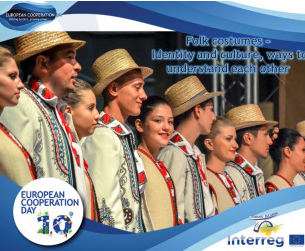
“Folk costumes – Identity and culture, ways to understand each other” – an online initiative launched by Interreg V-A Romania – Bulgaria Programme is our way to celebrate 10 years of European Cooperation on the 21st of September and we want YOU to be part of it!
How exactly?
The beauty of culture is diversity and every country has its own history and traditions. Folk Costumes are an important part of a country’s culture and we thought how interesting would be to see and share on our Facebook page people from everywhere, proudly wearing them. Share with us and our friends from all countries a little part of your cultural heritage by sending a picture with your folk costume. Remember, we are all united in diversity and this is what brings us together.
The pictures must be at the info@calarasicbc.ro, by 30th of September 2021.
All the received photos will be arranged in a Photo album which will be posted on the Programme website and Facebook page.
The photo you submit…
• must be in .jpg format,
• must have a good enough quality,
• must not contain copyrighted material (except as owned by you, the photographer).
You retain ownership and copyright of your photo. You grant the Interreg V-A Romania – Bulgaria Programme permission to use and display your photo including on the Programme website, galleries and social media. Also, the Interreg V-A Romania – Bulgaria Programme reserves the right to deny or remove your photo at any time. If there are minors in the photograph you submit, you must be the parent or guardian of those minors and have the authority to consent to the use of their image in the photograph. If there are other adults in the photograph, you must obtain each person’s express consent to being photographed and to having their image used and shared.
First version of the Interreg VI-A Romania-Bulgaria Programme – Strategy and Priority Axes
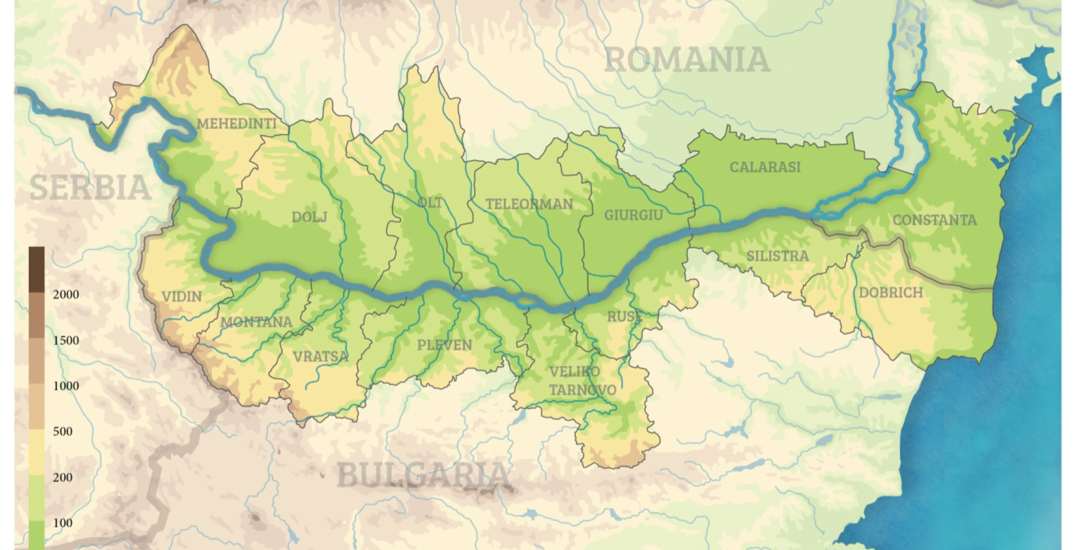
First version of the Interreg VI-A Romania-Bulgaria Programme – Strategy and Priority Axes can be found at this link
Guide on EU funding for tourism
This online guide highlights the wide range of funding programmes financed by the new budget, Multiannual Financial Framework 2021-2027, and Next Generation EU. With these resources and this guide, we’re supporting the move towards a more digital, sustainable and inclusive EU.
The guide will help you find appropriate funding. It contains links to relevant EU programme websites with the latest developments (such as annual work programmes or call for proposals) and further details per programme. For inspiration, you can also see concrete project examples funded by previous EU programmes.
https://ec.europa.eu/growth/sectors/tourism/funding-guide_en
Re-open EU

Re-open EU provides information on the various measures in place, including on quarantine and testing requirements for travellers, the EU Digital COVID certificate to help you exercise your right to free movement, and mobile coronavirus contact tracing and warning apps. The information is updated frequently and available in 24 languages. This should help you plan your travel in Europe, while staying safe and healthy.
EU countries have agreed on a coordinated approach to the restriction of free movement in response to the coronavirus pandemic. This includes a colour code for the classification of regions, based on the epidemiological situation there.