
During the environmental assessment procedure, the Ministry of Development , Public Works and Administration, holder of the Interreg VI-A Romania-Bulgaria Program, announces the interested public on the availability of the draft Program and the Environmental Report related to the said Program. The documents can be consulted at http://www.mmediu.ro/ and www.interregiciarobg.eu . Comments and suggestions regarding these documents are received at the email addresses: mihaela.macelaru@mmediu.ro and robg@mdlpa.ro , within 30 calendar days from the date of publication of the announcement.
PROGRES IMPORTANT ÎN PROCESUL DE APROBARE A PROGRAMULUI INTERREG VI-A ROMANIA-BULGARIA
Programul Interreg VI-A România-Bulgaria a fost aprobat de către Grupul de lucru comun pentru programare (GLP) în cadrul celei de a treia întâlniri, organizată azi, 3 februarie 2022.
Această decizie reprezintă un pas important în procesul de aprobare a programului de către Comisia Europeană. Înainte de trimiterea programului Comisiei Europene spre adoptare în termenul stabilit de regulamentele europene, 2 aprilie 2022, programul trebuie aprobat de către guvernele din Romania și Bulgaria, proces ce va avea loc în perioada februarie-martie 2022.
Discuțiile și deciziile abordate de către membrii GLP azi s-au axat pe cele mai importante secțiuni ale programului, respectiv: strategia și prioritățile programului, principiile orizontale, viziunea programului în domeniul comunicării și vizibilității, procesul de consultare, structurile programului, proiecte la scară mică, repartizarea răspunderii între cele două state membre în cazul unor corecții financiare De asemenea, a fost prezentat membrilor GLP și calendarul de finalizare a Analizei strategice de mediu (Strategic Environmental Assessment).
Un alt subiect important de pe agenda întâlnirii de azi a constat în prezentarea proiectelor de importanță strategică ce pot fi finanțate în cadrul Priorității 1- O regiune bine conectată (SO 3.2) și Priorității 2 – O regiune mai verde (SO 2.4 – proiecte referitoare la riscuri), proiecte ce vor fi incluse în anexa programului. Procesul de identificare a proiectelor de importanță strategică a avut loc în 2020 și 2021, ca parte a procesului de programare și s-a derulat prin intermediul apelurilor deschise de proiecte și discuțiilor cu actorii relevanți.
Versiunea finală a programului aprobat de către GLP poate fi consultată aici și prezentările din cadrul întâlnirii pot fi consultate aici.
ВАЖЕН НАПРЕДЪК В ПРОЦЕСА НА ОДОБРЯВАНЕ НА ПРОГРАМАТА INTERREG VI-A РУМЪНИЯ-БЪЛГАРИЯ
Програмата Interreg VI-A Румъния-България беше одобрена от Съвместната работна група за програмиране (СРГ) на нейното трето заседание, проведено днес, 3 февруари 2022 г.
Това решение е важна стъпка в процеса на одобрение на Програмата от Европейската комисия. Преди да изпрати програмата на Европейската комисия за приемане в срока, определен от европейските регламенти, 2 април 2022 г., Програмата трябва да бъде одобрена от правителствата на Румъния и България, процес, който ще се проведе между февруари и март 2022 г.
Дискусиите и решенията, на които членовете на СРГ обърнаха внимание днес, се фокусираха върху най-важните раздели на Програмата, а именно: програмна стратегия и приоритети, хоризонтални принципи, програмна визия в областта на комуникацията и видимостта, процес на консултации, програмни структури, малки проекти, разпределение на отговорността между двете държави-членки в случай на финансови корекции. На членовете на СРГ беше представен и графикът за приключване на стратегическата екологична оценка.
Друга важна тема в днешния дневен ред беше представянето на проекти от стратегическо значение, които могат да бъдат финансирани по Приоритет 1- Добре свързан регион (SO 3.2) и Приоритет 2 – По-зелен регион (SO 2.4- проекти, свързани с рискове), проекти, които ще бъдат включени в приложението към Програмата. Процесът на идентифициране на проекти от стратегическо значение се проведе през 2020 и 2021 г., като част от процеса на програмиране се осъществи чрез открити покани за проекти и дискусии със съответните участници.
Окончателната версия на Програмата, одобрена от СРГ, може да бъде разгледана тук, а направените презентации можете да намерите тук.
IMPORTANT PROGRESS IN THE APPROVAL PROCESS OF THE INTERREG VI-A ROMANIA-BULGARIA PROGRAMME
Interreg VI-A Romania-Bulgaria Programme was approved by the Joint Working Group for Programming (JWG) during the third meeting organised today, February 3rd, 2022.
This is an important step in the process approval of the programme by the European Commission. Before submitting the programme to the European Commission for approval within the deadline established by the EU Regulation, the 2nd of April 2022, the programme must be approved by the governments of Romania and Bulgaria, which will take place during February-March 2022.
The discussion and decisions agreed by the JWG members today were focused on the most important sections of the Programme: the strategy and the priorities of the programme, the horizontal principles, the approach of the communication and visibility of the programme, the consultation process, the programme structures, small scale projects and the apportionment of liabilities among participating member states. As well, the calendar for the carrying out the Strategic Environmental Assessment (SEA) was presented to the JWG members.
Another important topic on today’s agenda was the presentation of the projects of strategic importance for Priority 1 – A well connected region (SO 3.2) and Priority 2 – A greener region (SO 2.4- risks related operations), projects which will be included in the annex to the programme. The identification process of the projects of strategic importance was carried out during 2020 and 2021, as part of the programming process, using open calls and discussions with the relevant stakeholders.
The final version of the programme approved by the JWG can be consulted here and the presentations made may be consulted here.
SEMINARII ONLINE CU POTENȚIALII BENEFICIARI
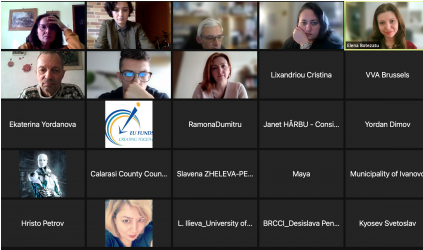
În datele de 17 și 18 ianuarie 2022 au fost organizate două seminarii online pentru a prezenta noul Program Interreg VI-A Romania-Bulgaria și oportunitățile de finanțare viitoare.
Seminariile au fost organizate de Civitta Romania și de VVA Brussels și au înregistrat un număr de peste 140 de participanți, actori cheie din regiunile de vest și est ale zonei de graniță româno-bulgare.
Pe parcursul evenimentelor, participanții au aflat mai multe informații despre provocările comune și nevoile de investiții, despre prioritățile de investiții ale noului program, precum și exemple de acțiuni. Totodată, potențialii beneficiari au participat la sesiuni tematice interactive în cadrul cărora au fost discutate idei de proiecte și au fost formulate întrebări specifice referitoare la priorități.
Pentru detalii și informații actualizate referitoare la noul program, urmăriți pagina noastră de FB și website-ul programului.
Prezentările de la cele două seminarii pot fi accesate aici.
ОНЛАЙН СЕМИНАРИ С ПОТЕНЦИАЛНИ БЕНЕФИЦИЕНТИ
На 17 и 18 януари 2022 г. се проведоха два онлайн семинара за представяне на проекта на Програмата Interreg VI-A Румъния-България и бъдещите възможности за финансиране.
Семинарите бяха организирани от CIVITTA Румъния и VVA Brussels (ВВС Брюксел) и събраха повече от 140 участници, заинтересовани страни от западните и източните региони на трансграничната област Румъния-България.
По време на събитията участниците научиха повече за съвместните предизвикателства и инвестиционни нужди, основните приоритети за финансиране на новата програма, както и примери за дейности. Присъстващите имаха възможност да участват в интерактивни сесии, където обсъждаха потенциални идеи за проекти и задаваха въпроси, свързани с конкретни приоритети.
За подробности и актуална информация, свързана с програмата, следете на нашата Facebook страница и уебсайт.
Презентациите от двата семинара можете да видите тук.
ONLINE WORKSHOPS WITH POTENTIAL BENEFICIARIES
On the 17th and 18th of January 2022, two online workshops to present the draft of the Interreg VI-A Romania-Bulgaria Programme and the future financing opportunities took place.
The workshops were organized by Civitta Romania and VVA Brussels and gathered more than 140 participants, stakeholders coming from the Western and Eastern regions of the Romania-Bulgaria cross-border area.
During the events the participants found out more about the joint challenges and investment needs, the main financing priorities of the new programme as well as examples of actions. The attendees had a chance to participate in interactive breakout sessions where they discussed potential project ideas and asked questions related to specific priorities.
For details and updated info related to the programme stay tuned on our Facebook page and website.
The presentation from the two workshops can be accessed here.
Tourism for all

Accessible tourism
All tourism businesses and institutions should aim to be universally accessible and create barrier-free tourism. This means ensuring tourist destinations, products and services are accessible to all people, regardless of their physical limitations, disabilities or age. Accessible tourism aims to allow tourism destinations to be enjoyed equally by everyone.
As an entrepreneur, you have to consider accessibility of tourism and leisure spaces as a basic quality factor – but you should also see it as an opportunity for differentiation and as a way to attract new customers.
While designing, executing, operating, maintaining and communicating about your tourism business, you must ensure that it is accessible and available to everyone.
Types of accessibility
There are various types of accessibility
- physical accessibility – improving spaces and infrastructure to create an environment where citizens can move around freely
- communication accessibility – helping people with communication difficulties to get their message across via tools and trained staff
- web accessibility – making booking services and related websites easier to access (view the EU tutorial on making your website e-accessibleSearch for available translations of the preceding link)
How should I adapt my tourism business to be accessible?
Accessible tourism is about making it easy for everyone to enjoy tourism experiences. Making tourism more accessible is not only a social responsibility – there is also a compelling business case for improving accessibility as it can boost the competitiveness of tourism businesses.
Evidence shows that making basic adjustments to a facility, providing accurate information, and understanding the needs of disabled people can result in increased visitor numbers.
Areas that need to be adapted according to subsectors
| Tourist information offices | Hotel establishments | Restaurants and cafés |
|
|
|
For more on how to apply physical accessibility measures in your tourism company, consult information on accessible tourismSearch for available translations of the preceding link.
Benefits of physical accessibility for your business
- Increase in the potential demand – according to the World Health Organisation, there are over 1 billion permanently disabled people in the world (15% of the world population) – this proportion rises to around 40% of the world population when including other categories of people who may temporarily need accessible services
- ‘Multi-client’ segment – on average, every 2 disabled guests will bring one companion
- Promotion of off-season travel – some senior citizens and disabled people can travel in low season – since these periods are less busy, travellers can often have greater accessibility to services
- Improving the company’s reputation – businesses that offer comprehensive accessibility will be seen in a better light than those that don’t, since they are taking steps to ensure their product or service can be used or enjoyed by everyone.
What is the current legislation on the topic?
Physical accessibility is regulated not only by international and European regulation, but also by national regulation. The main accessibility regulations and other instruments on an international and European level are as follows
- UN convention on the rights of persons with disabilities
- The global code of ethics for tourismSearch for available translations of the preceding link
- Council of Europe recommendation on ageing and disability
- Council of Europe resolution on universal design to achieve full participation
- Committee of the Ministers recommendation on the action plan to promote the rights and participation of the disabled
- Commission regulation on rights of disabled people in air travelSearch for available translations of the preceding link
Useful resources
- visit Britain offers case studies on physical accessibility in tourism.
- watch the ‘Mind the accessibility gap’ conference video summary from June 2014.
- the European Network for Accessible Tourism (ENAT)Search for available translations of the preceding link
- Europe For All accessible tourism directory – where you can register as a provider of accessible tourism services, evaluate your property and get in touch with customers
- learn about some good practices of accessible tourism from the European Capital of Smart Tourism competition’s compendium of best practices
Tutorial
Giving the right information on accessibility services
Find out what information you should transmit to disabled people, when this information should be transmitted and how to do so.
Tourism for all
Accessible tourism
All tourism businesses and institutions should aim to be universally accessible and create barrier-free tourism. This means ensuring tourist destinations, products and services are accessible to all people, regardless of their physical limitations, disabilities or age. Accessible tourism aims to allow tourism destinations to be enjoyed equally by everyone.
As an entrepreneur, you have to consider accessibility of tourism and leisure spaces as a basic quality factor – but you should also see it as an opportunity for differentiation and as a way to attract new customers.
While designing, executing, operating, maintaining and communicating about your tourism business, you must ensure that it is accessible and available to everyone.
Types of accessibility
There are various types of accessibility
- physical accessibility – improving spaces and infrastructure to create an environment where citizens can move around freely
- communication accessibility – helping people with communication difficulties to get their message across via tools and trained staff
- web accessibility – making booking services and related websites easier to access (view the EU tutorial on making your website e-accessibleSearch for available translations of the preceding link)
How should I adapt my tourism business to be accessible?
Accessible tourism is about making it easy for everyone to enjoy tourism experiences. Making tourism more accessible is not only a social responsibility – there is also a compelling business case for improving accessibility as it can boost the competitiveness of tourism businesses.
Evidence shows that making basic adjustments to a facility, providing accurate information, and understanding the needs of disabled people can result in increased visitor numbers.
Areas that need to be adapted according to subsectors
| Tourist information offices | Hotel establishments | Restaurants and cafés |
|
|
|
For more on how to apply physical accessibility measures in your tourism company, consult information on accessible tourismSearch for available translations of the preceding link.
Benefits of physical accessibility for your business
- Increase in the potential demand – according to the World Health Organisation, there are over 1 billion permanently disabled people in the world (15% of the world population) – this proportion rises to around 40% of the world population when including other categories of people who may temporarily need accessible services
- ‘Multi-client’ segment – on average, every 2 disabled guests will bring one companion
- Promotion of off-season travel – some senior citizens and disabled people can travel in low season – since these periods are less busy, travellers can often have greater accessibility to services
- Improving the company’s reputation – businesses that offer comprehensive accessibility will be seen in a better light than those that don’t, since they are taking steps to ensure their product or service can be used or enjoyed by everyone.
What is the current legislation on the topic?
Physical accessibility is regulated not only by international and European regulation, but also by national regulation. The main accessibility regulations and other instruments on an international and European level are as follows
- UN convention on the rights of persons with disabilities
- The global code of ethics for tourismSearch for available translations of the preceding link
- Council of Europe recommendation on ageing and disability
- Council of Europe resolution on universal design to achieve full participation
- Committee of the Ministers recommendation on the action plan to promote the rights and participation of the disabled
- Commission regulation on rights of disabled people in air travelSearch for available translations of the preceding link
Useful resources
- visit Britain offers case studies on physical accessibility in tourism.
- watch the ‘Mind the accessibility gap’ conference video summary from June 2014.
- the European Network for Accessible Tourism (ENAT)Search for available translations of the preceding link
- Europe For All accessible tourism directory – where you can register as a provider of accessible tourism services, evaluate your property and get in touch with customers
- learn about some good practices of accessible tourism from the European Capital of Smart Tourism competition’s compendium of best practices
Tutorial
Giving the right information on accessibility services
Find out what information you should transmit to disabled people, when this information should be transmitted and how to do so.
Tourism for all
Accessible tourism
All tourism businesses and institutions should aim to be universally accessible and create barrier-free tourism. This means ensuring tourist destinations, products and services are accessible to all people, regardless of their physical limitations, disabilities or age. Accessible tourism aims to allow tourism destinations to be enjoyed equally by everyone.
As an entrepreneur, you have to consider accessibility of tourism and leisure spaces as a basic quality factor – but you should also see it as an opportunity for differentiation and as a way to attract new customers.
While designing, executing, operating, maintaining and communicating about your tourism business, you must ensure that it is accessible and available to everyone.
Types of accessibility
There are various types of accessibility
- physical accessibility – improving spaces and infrastructure to create an environment where citizens can move around freely
- communication accessibility – helping people with communication difficulties to get their message across via tools and trained staff
- web accessibility – making booking services and related websites easier to access (view the EU tutorial on making your website e-accessibleSearch for available translations of the preceding link)
How should I adapt my tourism business to be accessible?
Accessible tourism is about making it easy for everyone to enjoy tourism experiences. Making tourism more accessible is not only a social responsibility – there is also a compelling business case for improving accessibility as it can boost the competitiveness of tourism businesses.
Evidence shows that making basic adjustments to a facility, providing accurate information, and understanding the needs of disabled people can result in increased visitor numbers.
Areas that need to be adapted according to subsectors
| Tourist information offices | Hotel establishments | Restaurants and cafés |
|
|
|
For more on how to apply physical accessibility measures in your tourism company, consult information on accessible tourismSearch for available translations of the preceding link.
Benefits of physical accessibility for your business
- Increase in the potential demand – according to the World Health Organisation, there are over 1 billion permanently disabled people in the world (15% of the world population) – this proportion rises to around 40% of the world population when including other categories of people who may temporarily need accessible services
- ‘Multi-client’ segment – on average, every 2 disabled guests will bring one companion
- Promotion of off-season travel – some senior citizens and disabled people can travel in low season – since these periods are less busy, travellers can often have greater accessibility to services
- Improving the company’s reputation – businesses that offer comprehensive accessibility will be seen in a better light than those that don’t, since they are taking steps to ensure their product or service can be used or enjoyed by everyone.
What is the current legislation on the topic?
Physical accessibility is regulated not only by international and European regulation, but also by national regulation. The main accessibility regulations and other instruments on an international and European level are as follows
- UN convention on the rights of persons with disabilities
- The global code of ethics for tourismSearch for available translations of the preceding link
- Council of Europe recommendation on ageing and disability
- Council of Europe resolution on universal design to achieve full participation
- Committee of the Ministers recommendation on the action plan to promote the rights and participation of the disabled
- Commission regulation on rights of disabled people in air travelSearch for available translations of the preceding link
Useful resources
- visit Britain offers case studies on physical accessibility in tourism.
- watch the ‘Mind the accessibility gap’ conference video summary from June 2014.
- the European Network for Accessible Tourism (ENAT)Search for available translations of the preceding link
- Europe For All accessible tourism directory – where you can register as a provider of accessible tourism services, evaluate your property and get in touch with customers
- learn about some good practices of accessible tourism from the European Capital of Smart Tourism competition’s compendium of best practices
Tutorial
Giving the right information on accessibility services
Find out what information you should transmit to disabled people, when this information should be transmitted and how to do so.